What Is the Fake Idaho Traffic Court Scam?
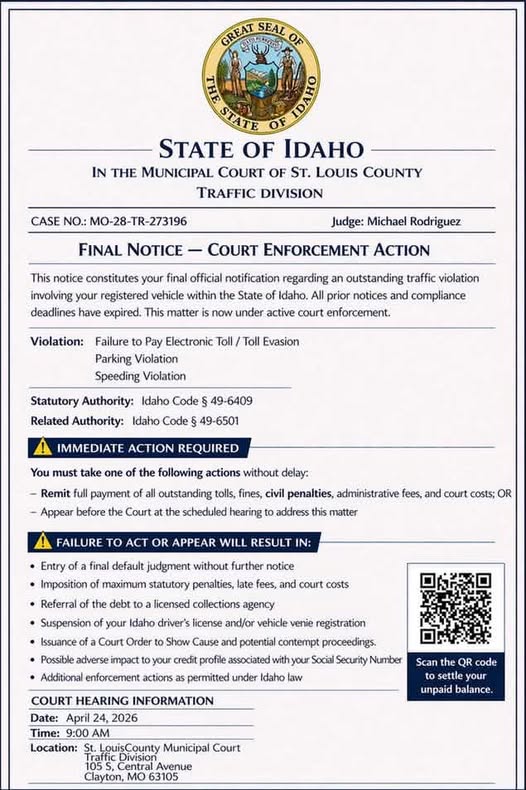
This scam pretends to be a traffic court or traffic violation notice. It may claim you owe money for a ticket, missed a deadline, or need to scan a QR code to avoid penalties.
Why This Scam Works
The message looks official enough to make people hesitate. It may include legal wording, violation references, and a QR code that appears to offer a simple way to resolve the issue.
What makes it convincing
- Official-looking state or court language
- Case numbers or citation-style formatting
- Threats of penalties or enforcement
- Immediate payment instructions
- A QR code that makes payment feel fast and easy
The Biggest Red Flag: The Message Pushes Speed Over Verification
Real issues can be verified through official channels. Scams pressure you to act before you check. If a message makes you feel rushed, stop and verify independently.
Additional red flags
- Unexpected traffic ticket notice by text
- QR code or suspicious link
- Threats of license suspension or legal action
- Generic violation details
- Payment demand without a safe verification path
How This Scam Steals Money and Data
The QR code or link can lead to a fake payment page. That page may collect:
- Credit or debit card information
- Personal details
- Contact information
- Fake fine or fee payments
How to Verify an Idaho Traffic Court Notice Safely
- Do not scan the QR code from the message.
- Do not reply to the sender.
- Search for the official court or agency website manually.
- Use a verified phone number to call if you are concerned.
- Never pay from a link or QR code sent unexpectedly.
Common Pattern Across States
These scams often reuse nearly identical templates across multiple states. The state name changes, but the pressure tactic, QR code, and fake court language stay similar.
See the full scam alert cluster here: Traffic Ticket Text Scams: Fake Court Notices by State.
If You Scanned the QR Code or Paid
If you only visited the page
- Close the page immediately
- Do not enter information
- Do not download files
- Watch for follow-up scam messages
If you entered payment or personal information
- Contact your bank or card issuer immediately
- Report the transaction as fraud
- Monitor your accounts
- Consider placing a fraud alert on your credit
- Save screenshots for reporting
Practice the “Pause + Verify” Habit
Scammers want speed. You need verification. A short pause can prevent a costly mistake.
Train Against Smishing Use Scam Lookup
FAQ
Is this Idaho traffic court message real?
Do not assume it is real. Verify through official court or government sources before paying or sharing information.
Why do scammers use QR codes?
QR codes hide the destination and make people act quickly. Scammers use them to send victims to fake payment pages.
What should I do if I received this text?
Do not scan, reply, or pay. Save a screenshot, delete the message, and verify directly through official sources if needed.